 EN
EN
 PT
PT
 ES
ES
 FR
FR
Why Chelating Agents Are Essential in Modern Industry
Have you ever wondered why soaps and detergents don’t work as well in hard water? Or why industrial processes require pure and controlled chemical environments? The culprit is often metal ions like calcium, magnesium, iron, and copper, which can interfere with performance and efficiency. That’s where chelating agents come in! Ethylenediaminetetraacetic acid (EDTA) is a powerful chelating agent that binds to metal ions, preventing unwanted reactions and enhancing product performance in various applications.
The Problem with Metal Ions in Cleaning and Water Treatment
Metal ions can wreak havoc in multiple industries:
- Hard Water & Cleaning Inefficiency: Soaps and detergents lose effectiveness when reacting with calcium and magnesium in water, leaving behind soap scum and residue.
- Staining & Discoloration: Iron and copper can cause staining in textiles, paper, and surfaces.
- Scale Formation in Water Treatment: Hard water leads to scale buildup in pipes, boilers, and cooling systems, reducing efficiency and increasing maintenance costs.
- Oxidation & Degradation: Certain metals catalyze oxidation, leading to product degradation in food, cosmetics, and pharmaceuticals.
What Is EDTA? The Science Behind This Chelating Powerhouse
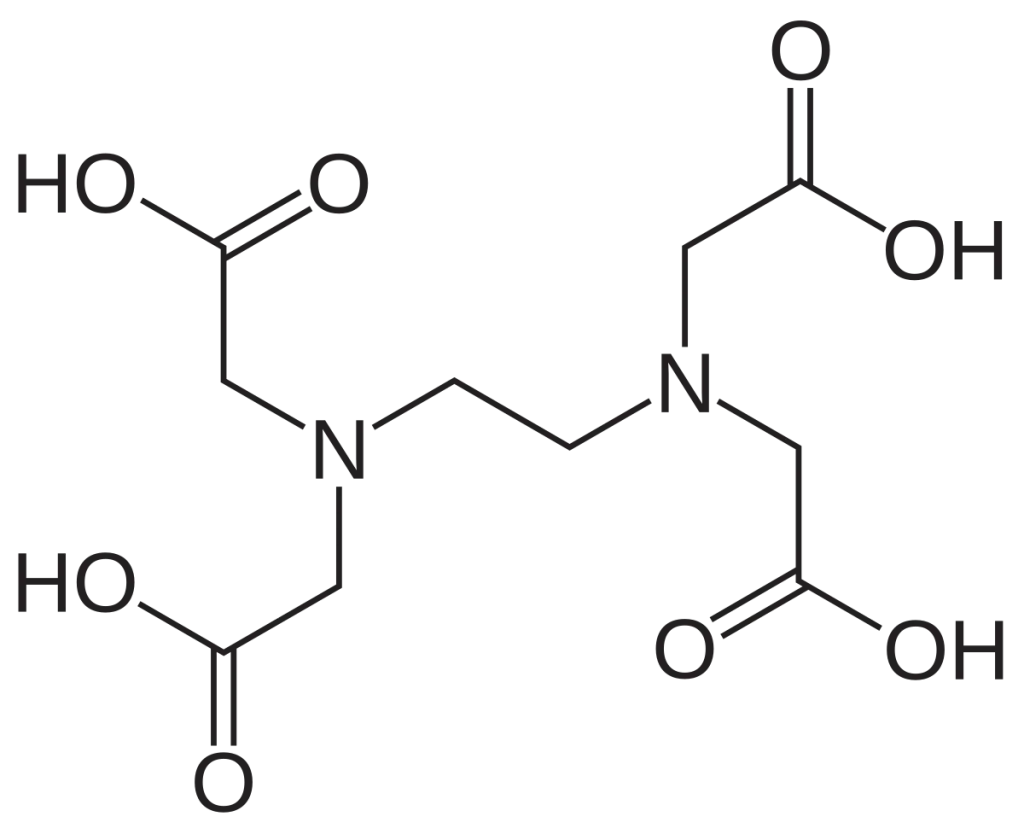
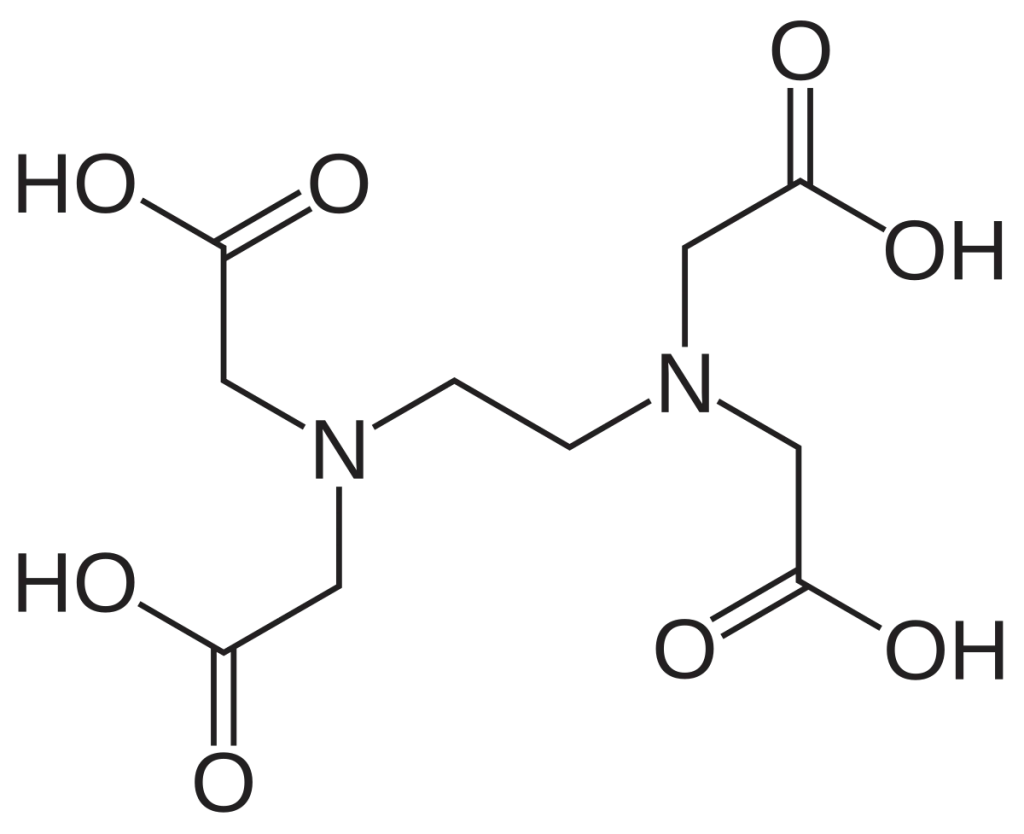
EDTA, or Ethylenediaminetetraacetic acid, is an aminopolycarboxylic acid with the ability to form strong complexes with metal ions. Its chemical formula is C₁₀H₁₆N₂O₈, and it has a molecular weight of 292.24 g/mol. The molecular structure consists of nitrogen and oxygen donor atoms that effectively bind metal ions, forming stable, water-soluble complexes.
How Is EDTA Made?
EDTA is synthesized through a reaction between ethylenediamine, formaldehyde, and sodium cyanide, followed by acidification. This process produces high-purity EDTA, which can be used in different forms, including disodium EDTA (Na₂EDTA), tetrasodium EDTA (Na₄EDTA), and calcium disodium EDTA (CaNa₂EDTA), depending on the application.
Applications of EDTA: Where Can It Be Used?
EDTA is a versatile ingredient used in various industries:
- Cleaning & Detergents: Enhances the effectiveness of soaps and shampoos by preventing metal-induced precipitation.
- Water Treatment: Prevents scale buildup and improves the performance of industrial water systems.
- Cosmetics & Personal Care: Used in skincare products, shampoos, and creams to stabilize formulations and enhance preservative efficiency.
- Food & Beverage Industry: Used as a food preservative to prevent oxidation and maintain color and flavor.
- Pharmaceuticals: Helps improve drug stability and bioavailability.
- Pulp & Paper Industry: Prevents unwanted reactions that cause discoloration and deterioration of paper products.
- Agriculture & Fertilizers: Enhances nutrient absorption in plants by preventing metal precipitation.
Physical & Chemical Characteristics of EDTA
- Appearance: White, crystalline powder
- Solubility: Soluble in water (depends on salt form)
- pH Stability: Works effectively in a wide pH range
- Complex Formation: Strong affinity for metal ions, forming stable, water-soluble complexes
- Thermal Stability: Heat-resistant and does not degrade under normal conditions
How to Formulate with EDTA
EDTA is typically added at concentrations ranging from 0.01% to 1%, depending on the application. Here are some formulation tips:
- Water-Based Systems: Use tetrasodium EDTA for alkaline formulations and disodium EDTA for neutral or acidic systems.
- Blending Considerations: Add EDTA early in the formulation process to ensure proper dissolution and distribution.
- Synergistic Use: Combine with preservatives to boost antimicrobial efficacy in cosmetics and personal care products.
Contact Us for EDTA Solutions!
Looking for high-quality EDTA for your formulations? We offer EDTA in various grades and concentrations tailored to your industry needs. Contact us today to learn more, request a sample, or get competitive pricing!
Need formulation help?
Our technical team can match antifoams, chelates, adjuvants, and bioactives to your process — from lab trials through scale-up.
- Application & dosage guidance
- Compatibility & process tips
- Sample and quote support
Article details
- Published:
- Market: Chelating Agents